Puzzle Adventure: Mystery Game
- 4.4
- Rating
- 5.00M
- Installs
- Free
- Price

 Analysis by App-foxy
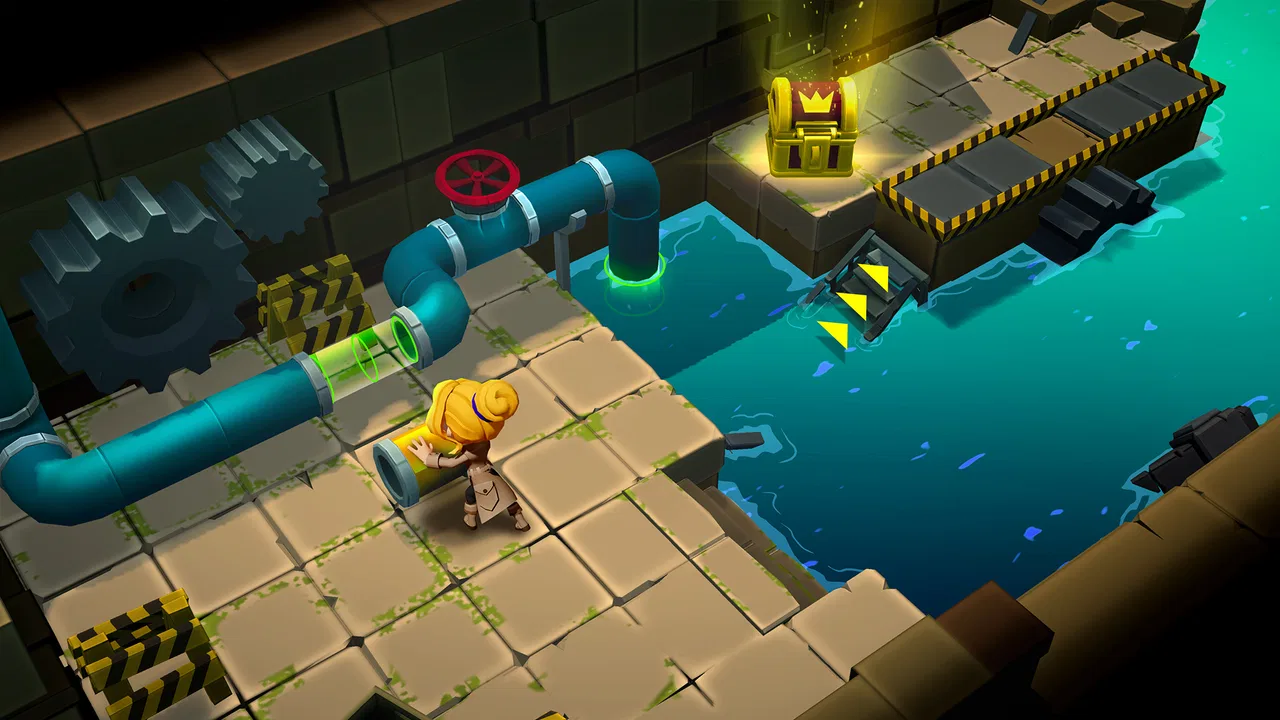
I spent time with Puzzle Adventure: Mystery Game as an adventure game built around investigation, crime scenes, and escape-style puzzles. Its central appeal is easy to understand: you move through a mystery, examine what is in front of you, and use your observations to work out how to progress. I found it more satisfying than a simple collection of disconnected brainteasers because the puzzles are presented as part of a case rather than as isolated challenges.
The game is free to start, aimed at players aged 10 and over, and developed by PIXEL FEDERATION, s.r.o. It has reached over five million installs and holds a 4.4 average from around 55 thousand ratings, which suggests that the format has found a substantial audience. Those figures matter less to me than the actual fit: this is best for someone who enjoys looking closely, testing ideas, and accepting that a clue may make sense only after several other details have been examined.
How the mystery format feels in everyday play
The strongest part of the experience is the combination of investigation and puzzle solving. Instead of asking me to solve abstract logic exercises with no context, the game gives those tasks a reason to exist inside a mystery. Visiting a crime scene changes the way I approach each screen. I am not merely searching for the next button; I am trying to understand what happened, what looks unusual, and which object or detail deserves another look.
You May Also Like

 Blood Strike: 2.5 Anniversary
Blood Strike’s Loadouts Turn Every Drop Into a Tactical Gamble
A close look at Blood Strike’s custom loadouts: how fast access to signature weapons reshapes its battle royale rhythm, rewards preparation, and narrows the gap between fights.

 Pandora - Music & Podcasts
Pandora’s Music Is Easy to Start, but Harder to Recover
Pandora’s strength is its low-effort path from a seed to a station. Its weak spot is how much confidence it asks you to place in connection, setup, and quiet recovery.

 8 Ball Pool
 Is Built on Rivalries, Rematches, and Routine
A close look at the rivalries, rematches, shared routines, and unanswered safety questions that turn a quick pool match into a persistent mobile community.

 Samsung Music
’s Quiet Strength Is Playing What You Already Own
Its reach comes less from spectacle than from dependable access to a personal library. That simplicity is both the app’s strongest retention engine and its ceiling.

 AccuWeather: Weather Radar
AccuWeather Review: A Quick, Clear Forecast for Everyday Decisions
For everyday plans, the best forecast is the one you can understand quickly. AccuWeather makes rain timing, radar, and local conditions easy to act on, with a few trade-offs.

 Hill Climb Racing
Why Hill Climb Racing Still Turns Crashes Into One More Run
A tiny car, a bumpy hill and one more upgrade: Hill Climb Racing keeps resurfacing because its simple chaos makes every near-miss feel personal.
More From Our News Desk



That structure makes short sessions work well. If I have a spare moment, I can investigate one area or work through a single obstacle without needing to commit to a long uninterrupted play session. At the same time, the mystery framing gives me a reason to return later. I often remember a suspicious detail between sessions and come back with a different interpretation, which is more engaging than simply grinding through levels.
A realistic use case is a quiet commute or a few minutes after dinner. I can play with the sound lowered, examine a scene, and stop when I reach a point that needs more thought. The game does not depend entirely on reflexes, so putting it down and resuming later feels natural. That makes it a better match for fragmented time than an action-heavy adventure that punishes every interruption.
My advice is to slow down during the first examination of a scene. Tapping randomly may eventually reveal something, but it weakens the investigative part of the game and can make the experience feel more confusing than it needs to be. I get better results by scanning the whole area, noting unusual shapes or objects, and only then trying combinations or interactions. This simple habit also reduces the temptation to spend resources or use assistance too early.
What makes the puzzles satisfying
The puzzles are most enjoyable when I can connect a visible clue with a practical action. I like the moment when an object that seemed decorative becomes relevant, or when a sequence becomes clear after I stop treating each item separately. That kind of progress feels earned because it comes from attention rather than from rapid tapping.
There is also a useful difference between being stuck and being completely lost. When I am stuck, I usually know the area or object I should be thinking about, but I have not found the correct interpretation. When I am lost, I am unsure whether I missed a clue, misunderstood the goal, or simply need to search elsewhere. The game is at its best when the scene gives enough visual direction to keep those states apart.
Players who prefer direct instructions may find the indirect approach frustrating. The game’s appeal depends on investigating rather than being led from one obvious marker to the next. I would not recommend it to someone looking for a fast, purely casual tap-through experience. It asks for patience, and some players will consider that a strength while others will see it as unnecessary friction.
Speed during normal sessions
In ordinary play, the perceived speed comes less from rapid action and more from how quickly I understand the current objective. Once I know what I am looking for, moving through a scene feels purposeful. When the clue is less obvious, the pace naturally slows because the real activity is observation and reasoning rather than movement.
That distinction is important when comparing it with other adventure games. A conventional action adventure may feel faster because it constantly supplies movement, combat, or immediate objectives. A hidden-object title may feel more relaxed because its search loop is clearer. This game sits between those styles: it uses the atmosphere of a mystery while expecting me to solve problems before the story can continue.
I would not judge it by the standards of a twitch game. Its success is measured by whether the next discovery feels understandable and whether the transition from clue to puzzle feels fair. For me, the best sessions are not necessarily the quickest ones. They are the sessions where I finish with a clear sense of how the evidence fitted together.
What happens during heavier play
Longer sessions place a different demand on the experience. Repeatedly examining scenes, revisiting clues, and working through several puzzles in one sitting can make the game feel mentally heavier even when the controls remain simple. The main resource being tested is my attention. After a while, I am more likely to overlook a small detail or retry an idea that I already rejected.
I found that taking a short break is more useful than forcing progress. When I return, I can often see the puzzle from a cleaner angle. This is a practical advantage of the investigation format: progress does not depend only on continuous play. A player can make notes outside the game, remember the important objects, and resume with a plan instead of starting over mentally.
For heavy users, I would divide a longer session into cases, scenes, or natural stopping points rather than trying to clear everything at once. That approach reduces fatigue and makes the story easier to follow. It also helps preserve the sense of discovery, because every new clue receives more attention than it would during a rushed marathon.
Another trade-off appears when assistance becomes tempting. A hint can protect momentum when I have genuinely exhausted the visible possibilities, but using help immediately turns the investigation into a sequence of instructions. I recommend reserving assistance for situations where I have searched carefully and can explain exactly what has stopped me. That keeps the puzzle-solving satisfaction intact while still giving me a way forward.
Stability and recovering from interruptions
For a game based on careful examination, reliability matters because losing progress would be especially irritating. I pay attention to whether I can leave a session and come back without having to reconstruct every step. In practical use, I treat the current puzzle state as something worth allowing to settle before closing the game, especially after completing an important interaction.
The safest recovery habit is simple: after a meaningful discovery or completed puzzle, pause briefly before switching apps, locking the phone, or ending the session. That is not unique to this title, but it is particularly sensible here because the value of progress is often in the sequence of deductions rather than in a single visible score.
If I become unsure after returning, I retrace the last clue instead of tapping through the entire scene again. I ask myself what changed, which item was recently used, and what new route or interaction should now be available. This method is faster and less frustrating than treating the whole case as if it has reset.
The game’s long-term appeal also depends on whether the mystery remains coherent after interruptions. I prefer to stop at a point where I understand the current objective. Ending a session in the middle of an unexplained puzzle makes any adventure game feel less reliable, even when the application itself is working normally.
Device requirements and practical limits
The Android release requires version 8.0 or later, so it is not aimed at the very oldest Android phones and tablets. That requirement is modest by current standards, but anyone using an older device should check compatibility before planning to play. The game is also available as a free download, with optional purchases ranging from $0.99 to $109.99 per item.
That purchase range changes how I would approach the game. I would begin with the free experience and decide whether the investigation loop suits me before spending anything. Players who dislike optional purchases in puzzle adventures should be especially deliberate: the most comfortable approach is to treat paid assistance as a choice, not as part of the basic reason to install the game.
Because the game relies on examining detailed scenes, a very small display may make objects harder to distinguish than they would be on a larger phone or tablet. This is not a reason to avoid it, but it does affect comfort. On a compact screen, I would increase the time spent scanning and avoid playing when I am tired or in poor lighting. A larger display is preferable for players who want to inspect every corner without straining.
Battery and storage expectations should also be judged by the type of use. This is not a game I would choose when I want a minimal, text-only experience. It presents visual scenes and asks the device to keep an interactive adventure running, so extended sessions are naturally more demanding than reading a short article or playing a very simple puzzle. I would keep the device charged for longer investigations and close unnecessary apps if the phone is already struggling.
Who will enjoy it, and who should skip it
I recommend it to players who like detective stories, escape-room reasoning, and visual searches that lead somewhere meaningful. It is a particularly good fit for someone who wants an adventure game that can be played in short bursts but still rewards close attention. The age rating of Everyone 10+ also makes it more approachable for younger players who enjoy mysteries, provided they are comfortable with puzzles that may not explain every step immediately.
I would be more cautious about recommending it to players who want constant action, competitive multiplayer, or a completely linear experience. It is also not ideal for anyone who becomes frustrated when a game expects them to revisit a location or reconsider an assumption. A straightforward casual puzzle game may be better for a player who wants quick, self-contained rounds with no narrative investigation attached.
Compared with a typical hidden-object alternative, this game offers more reason to care about what I find because the search is tied to an unfolding mystery. Compared with a traditional adventure game, it places less emphasis on reflexes and more on noticing relationships between clues. The trade-off is that the pace can feel slower, and a player who prefers immediate feedback may find the investigative pauses too long.
Version, audience, and overall value
The current version is 3.19.0, and the game has been available since January 31, 2022. Those details give it the profile of an established adventure rather than a brand-new experiment. With around 3.2 thousand written reviews and more than five million installs, it is clear that many players have tried the format, while the 4.4 average indicates that the overall reception is strong without suggesting that every puzzle or pacing choice works for everyone.
I see the free entry point as the biggest practical advantage. I can test whether I enjoy the crime-scene investigation style without committing money upfront. The important condition is self-control around optional purchases. If I am comfortable progressing carefully and only considering a purchase when it offers clear value to my own play style, the model is manageable. If I prefer a single upfront purchase with no temptation to buy individual items, another adventure game may suit me better.
The game also has value as a shared activity. I can show a puzzle to a friend or family member and discuss what a clue might mean without handing over a controller or requiring fast reactions. That makes it more social than its single-player investigation format might suggest. The best conversations come from comparing interpretations rather than simply asking someone else to solve everything.
My final performance verdict
My overall impression is that Puzzle Adventure: Mystery Game is strongest when I treat it as a patient investigation rather than a rapid puzzle dispenser. Its perceived speed is steady during clear objectives, its heavier moments are mainly attention-heavy, and its device demands are reasonable for an Android game that presents detailed interactive scenes. The Android requirement of version 8.0 or later is worth checking, especially on an older phone.
I would install it if I wanted a free mystery adventure for short sessions, visual clue hunting, and puzzles that feel connected to a case. I would skip it if my priority were action, instant objectives, or a purchase model with no optional item decisions. The occasional uncertainty and slower stretches are real limitations, but they are also part of what gives the investigation its character.
My practical recommendation is to play with a deliberate routine: inspect the whole scene first, remember unusual details, use help only after a genuine attempt, and stop at a clear progress point. With that approach, the game becomes less about tapping until something happens and more about building a chain of deductions. For me, that careful rhythm is the reason to try it.
FAQs for Puzzle Adventure: Mystery Game
01What is Puzzle Adventure: Mystery Game about?
Puzzle Adventure: Mystery Game combines story-driven exploration, hidden-object challenges, and logic puzzles. You guide the main character through mysterious locations, investigate clues, collect useful items, and solve problems to uncover the next part of the story. The game is designed for players who enjoy casual adventure games with a mix of narrative progression and brain-teasing activities.
02Is Puzzle Adventure: Mystery Game free to download and play?
The game is generally available as a free download, but it may include optional in-app purchases. These purchases can provide extra energy, hints, boosters, special items, or faster progress. You can usually play without spending money, although waiting systems, limited resources, or more difficult puzzles may encourage optional purchases as you advance through the adventure.
03Does the game require an internet connection?
An internet connection may be needed for certain features, including downloading game content, synchronizing progress, displaying advertisements, accessing events, and processing in-app purchases. Some previously loaded sections may work offline, but the experience can vary by device and version. For the most reliable performance, it is best to launch the game while connected to Wi-Fi or mobile data.
04Is Puzzle Adventure: Mystery Game suitable for children?
The game is generally suitable for players who enjoy light mystery stories and puzzle-solving, but parents should review its age rating before installation. Depending on the version, it may contain advertisements, optional purchases, mild suspense, or online features. Younger children may also need help with reading, more complex puzzles, and managing in-app purchase settings.
05What can I do if my progress is lost or the game stops working?
Before troubleshooting, make sure the game is updated and that your device has enough free storage and memory. If available, connect the game to its supported account or cloud-saving option so progress can be restored after reinstalling or changing devices. Restarting the app and device may resolve minor problems. For missing progress or purchase issues, contact the developer through the official support channel and include your player details.
Pros
- Engaging puzzles provide a satisfying challenge without feeling overly complicated.
- Atmospheric visuals and sound effects strengthen the mystery-focused gameplay.
- Exploration rewards curiosity with hidden objects
- clues
- and optional discoveries.
- The story unfolds gradually
- making each new location feel meaningful.
- Touch controls are simple and responsive on both phones and tablets.
Cons
- Some puzzles rely on trial and error rather than clear logical clues.
- Hints may be limited
- encouraging waits or purchases when you are stuck.
- Later chapters can feel repetitive because objectives follow similar patterns.
- The game may occupy considerable storage space due to its visual content.
- Progress can feel slow for players who prefer fast-paced puzzle games.

Puzzle Adventure: Mystery Game
Gallery